
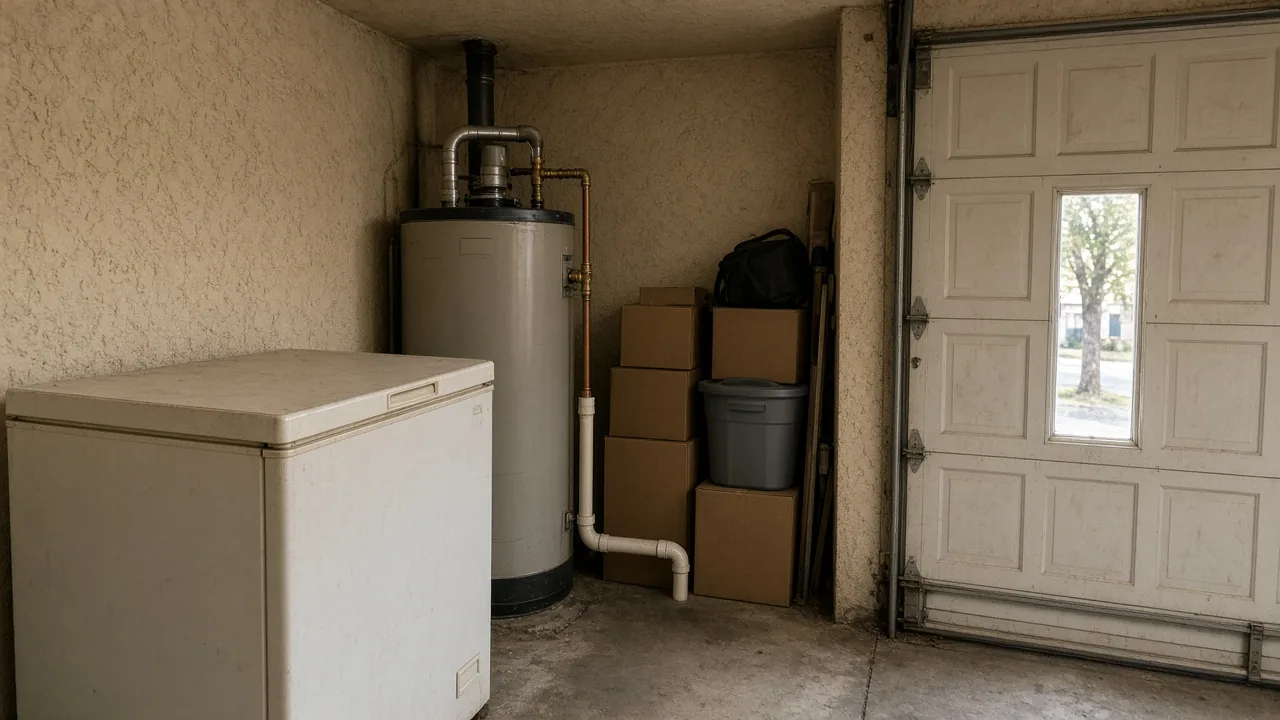
Older Riverside houses, especially downtown, along Victoria Avenue and in mid-century tracts, often keep the water heater in a tight garage or a small closet. That location shapes every repair and replacement: access, venting, combustion air, seismic straps and the path of a T&P drain. The work is still ordinary plumbing, but it is not the same as rolling a tank into an empty three-car garage in a new tract.
Downtown and the Mission Inn district
The city's Downtown neighborhood page describes a grid laid out in 1870 and a compact historic core around the Mission Inn Hotel & Spa, Mount Rubidoux Park and Fairmount Park. Houses and mixed-use buildings in that part of the city can have heaters in older garages, utility closets or awkward corners. Tell the provider if access is tight or if the heater shares a closet with a furnace or a stack of storage.
Victoria Avenue and Arlington Heights
Victoria Avenue is a historic, roughly seven-mile divided avenue listed in the National Register. The Arlington Heights neighborhood page describes a low-density citrus greenbelt. Houses there can be older, with long lots and garages that were not designed around a modern 50-gallon tank or a concentric vent. California Citrus State Historic Park sits in that part of the city and is a reminder of the housing stock's citrus-era roots.
Rather explain it out loud? One call covers it.
Call 000 000 0000What the city's handout expects anyway
Tight access does not waive the Water Heater Installations handout. Straps, T&P drains, venting, garage burner height and combustion air still apply. If a closet cannot provide combustion air, the answer is a different location or a different appliance, not a skipped opening.
Canyon Crest and later tracts
Canyon Crest is mostly later subdivisions on hills, with some older citrus-nursery history. Garages there are often more straightforward, but hillside houses can still have long vent runs or tight side yards for an outdoor tankless termination.
What to say when you call
Mention the neighborhood only if it helps with access: a one-car garage downtown, a long driveway off Victoria, a closet off a hallway. Have the heater's location, fuel and the width of the door ready. See water heater repair and replacement.
Common access problems in older Riverside houses
The same pattern shows up in many older garages: a water heater tucked behind a freezer, a tight side clearance, a door that is narrower than a modern tank, or a vent that jogs around a storage loft. Closets off a hall can be worse, especially when the heater shares the space with a furnace or a stack of paint cans. Those conditions do not make the job impossible. They do mean the provider needs an honest description before anyone assumes a standard swap.
Measure the door width if you can do it safely. Note whether the heater sits on a stand, in a pan, or directly on a slab. Note whether a car can strike it, because the city's handout requires protection in a garage. If the T&P drain currently dumps on the garage floor, say so. That is a correction, not a footnote.
What "historic" does and does not change
A house near the Mission Inn, along Victoria Avenue or in a historic neighborhood is still subject to plumbing and fuel-gas rules. Historic status can add design review on visible exterior changes, such as a new wall termination for a tankless vent on a street-facing stucco wall. It does not waive seismic straps or a legal T&P drain. If you think design review may apply, mention the location and ask the provider or Planning, rather than guessing from this page.
Mid-century tracts and later hillsides
Not every tight garage is from the nineteenth century. Mid-century ranch houses and some hillside Canyon Crest lots have short garages, low ceilings or long, narrow side yards. A concentric vent through a side wall can be the cleanest tankless path, or it can be blocked by a property line, a window or a meter. A tank replacement that stays on the existing pad is often the least invasive option in those houses.
Wood Street, Magnolia and other named places
Riverside has many named neighborhoods and corridors. You do not need a perfect neighborhood name to get help. The useful facts are the city, the street, the heater location and the access limits. If you live near a well-known public place such as Mount Rubidoux Park, Fairmount Park or California Citrus State Historic Park, that can help a provider picture the part of town, but the official permit still follows the address, not the landmark.
How this changes a repair or a replacement
A repair in a tight garage may take longer simply because parts and a drain pan are hard to reach. A replacement may need a slightly shorter or narrower tank, a different stand or a carefully planned vent. A tankless installation in the same space has to solve combustion air and termination, not only wall space. When you call, start with access. The appliance conversation is easier once the provider knows whether a person can actually reach the unit.
Talk it through by phone
Call the number on this page if you want to talk through how this applies to your heater and address. Have the city, the fuel and the location of the unit ready. Coverage is confirmed on the call.
Sources checked
Reviewed November 17, 2026. Confirm anything important with the agency, since rules and programs change.