
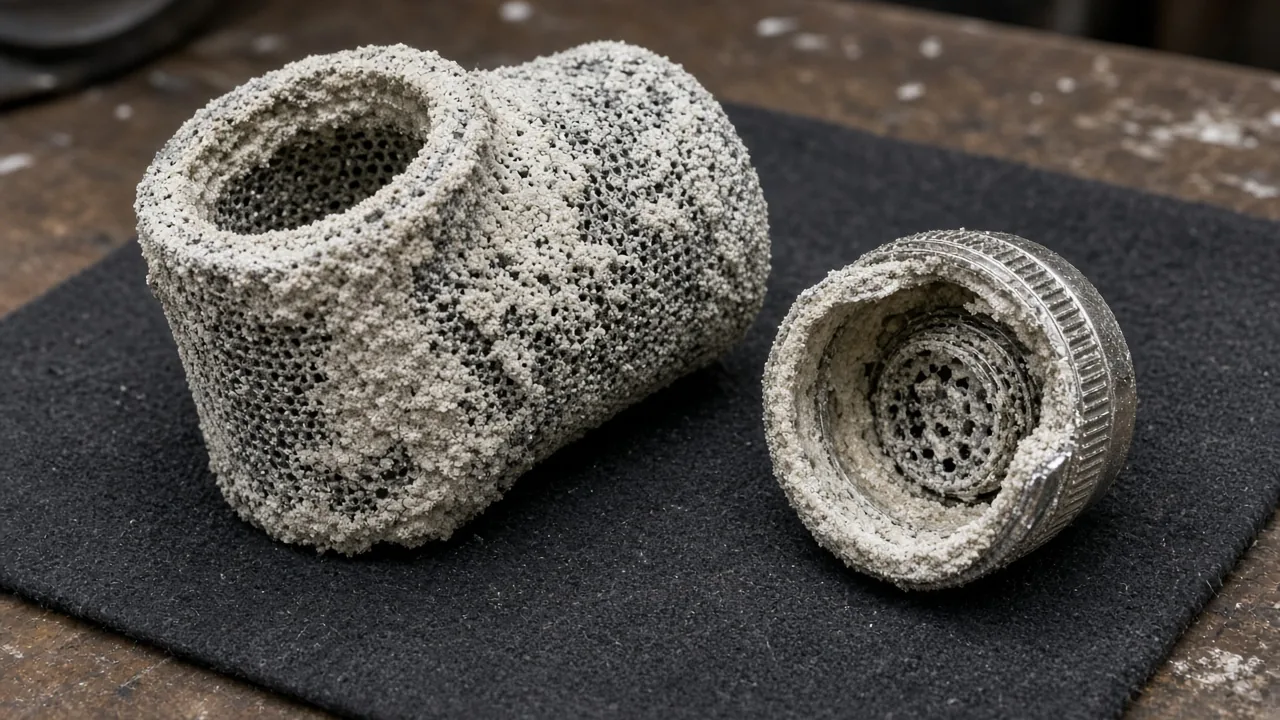
Riverside Public Utilities' 2025 Water Quality Report lists average hardness at 197 mg/L as calcium carbonate, or about 12 grains per gallon, with a range of 180 to 210 mg/L. That is very hard water, and it is one of the main reasons tankless units in this city need regular descaling and why storage tanks rumble, collect sediment and wear anodes faster than they would in a soft-water town.
Where the number comes from
The official landing page is the RPU Water Quality page. The 2025 Water Quality Report is the source for the hardness figure used on this site, checked on November 17, 2026. The report also says RPU met its 2025 supply needs with groundwater from the Bunker Hill and Riverside Basins. If you quote a hardness number in a decision about treatment or a warranty, re-read the current report rather than memorizing this paragraph forever.
What hard water does to a tank
Minerals fall out of solution when water is heated and sits in a storage tank. The layer at the bottom insulates the water from the burner or the lower electric element, so the heater works longer and can rumble or pop. Anodes are sacrificed faster. Drain valves clog. Eventually the tank rusts from the inside. A yearly tank flush and an anode check are the usual maintenance answer, not a miracle.
Rather explain it out loud? One call covers it.
Call 000 000 0000What hard water does to a tankless unit
A tankless heat exchanger is a narrow, hot pathway. Scale coats it, flow drops, the unit overheats, and error codes appear. Rinnai's residential FAQ says the unit should be flushed at least once a year to keep it free of scale and lime, and that the interval depends on water quality. Navien's descaling guide recommends descaling at least once a year, more often with higher mineral content, higher set temperature and heavier use. Noritz ties the schedule to the manual and to whether the water is treated. At about 12 grains per gallon, a two-year interval is a hopeful guess, not a plan.
Treatment versus descaling
Some manufacturer manuals require water treatment above a hardness limit and exclude scale damage from warranties if maintenance is skipped. This site does not sell softeners or scale devices, and it does not quote warranty dollar limits. Read the manual for the installed model and the current official report, then ask the provider what that manufacturer expects. Descaling and treatment are complements, not substitutes.
Other cities, other utilities
Corona, Moreno Valley, Jurupa Valley, Norco, Eastvale, Perris, Lake Elsinore and Colton often use different water retailers. Do not copy Riverside Public Utilities' 12-grain figure onto those addresses. Ask for that utility's consumer confidence report.
What to do if you already have symptoms
Weak tankless flow, overheat codes, a rumbling tank, rusty flush water or a heater that no longer keeps up can all be hard-water symptoms. See tankless descaling, tankless repair and tank flush. Call the number on this page if you want a provider to look at the unit. There is no promise of immediate service.
Why Inland Empire groundwater is hard
Minerals dissolve as water moves through local basins. Calcium and magnesium are the usual hardness ions. When that water is heated, those minerals come out of solution more readily and cling to the hottest surfaces they can find: the bottom of a tank, an electric element, or the narrow passages of a tankless heat exchanger. Riverside Public Utilities' report is useful because it gives a recent official number instead of a rumor. It is not a chemistry textbook, and it is not a warranty.
How often to flush or descale
For a storage tank, an annual flush is a common recommendation in hard-water cities, and an anode check belongs in the same conversation. A tank that has never been flushed in a decade may produce rusty or sludgy water when the drain is finally opened. That does not automatically mean the tank has failed, but it is a warning. For a tankless unit, Rinnai, Navien and Noritz all treat yearly descaling as a starting point and then tell owners to tighten the interval when the water is harder, the set temperature is higher or the household uses more hot water. At about 12 grains per gallon, waiting two or three years is how many units end up with overheat codes and weak flow.
This site will not invent a flush interval for a model it has not seen. The manual and the water report should set the schedule, and the provider can say whether the unit in front of them looks overdue.
Filters, screens and isolation valves
Many tankless installations include a service-valve kit so the unit can be isolated and flushed without breaking the house plumbing. Inlet screens catch grit. If those valves were never installed, a descaling visit is harder and more expensive in labor, even if the chemistry is the same. Mention whether you already have service valves when you call.
Softeners and scale devices, without a sales pitch
A softener or a scale-control device can reduce how fast minerals form, and some manufacturer manuals require treatment above a stated hardness. This referral line does not sell treatment equipment and does not claim that any one brand of softener will protect a warranty. Read the manual. If treatment is already in the house, say so, because it changes the maintenance picture.
What a phone call should cover
Have the official hardness in mind for Riverside Public Utilities customers, and have the utility name ready if you live in Corona, Moreno Valley or another nearby city. Describe the symptoms: rumbling, weak tankless flow, error codes, rusty drain water or a heater that no longer keeps up. Then ask what the provider would inspect first. There is no promise that descaling will be done the day you call.
Talk it through by phone
Call the number on this page if you want to talk through how this applies to your heater and address. Have the city, the fuel and the location of the unit ready. Coverage is confirmed on the call.
Sources checked
Reviewed November 17, 2026. Confirm anything important with the agency, since rules and programs change.